


Long-lasting Graphene Battery for Smartphones and Electric Cars
The “University of Central Florida” has developed a prototype that will revolutionize smartphone battery life and capacity.
And it doesn’t degrade even after 30,000 recharges
One of the main goals when buying a new smartphone is finding a device with the perfect battery. The dream would be to find one that lasts a week with just seconds of charging. And now it might no longer be a “utopia thanks to the material of the future: graphene.
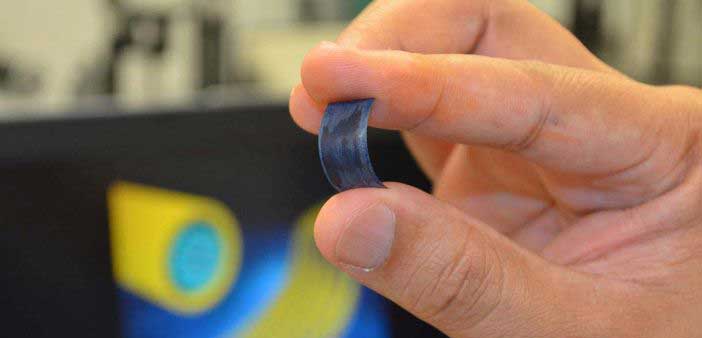
Graphene batteries with a week-long autonomy. Scientists at the University of Central Florida have developed a supercapacitor battery prototype, capable of providing” smartphone battery life 20 times longer than standard lithium-ion batteries. And as if that weren’t enough, a full charge takes only a few seconds. In practice, thanks to this new discovery, we could recharge our smartphone in a very short time and not need to plug it into a power outlet for at least a week. The era of battery packs, in short, might be coming to an end.
The future battery that doesn’t degrade
One of the main problems with lithium-ion batteries is that they deteriorate over time. After using a smartphone for a while “(but this applies to all battery-powered devices), you start to notice that the duration decreases, the” smartphone’s battery life reduces and charging times increase. This is because lithium-ion batteries can only be recharged a limited number of times (between 800 and 1,000) and at half their life expectancy (about 400 charging cycles) they start to degrade. This explains why, after about 18 months, almost all smartphone batteries start showing problems and need to be replaced or require alternative solutions.
The prototype from the “American university, being made of graphene, is immune to the so-called ‘memory effect’: even after 30,000 charging cycles, it doesn’t show the ‘unpleasant’ effects of chemical degradation and the” battery life remains unchanged.
How graphene batteries work
Graphene batteries utilize the ability to store energy statically on their surface in very rapid times. Therefore, the larger it is, the more electrons it contains and the longer a battery will last. But don’t imagine huge devices. The graphene battery needed to power a smartphone for a week is much smaller than the “regular” ones currently in use.

The future belongs to graphene
Graphene, according to many experts, is the material that will change our lives and our devices in the near future. This is because it allows creating long-lasting batteries but especially because it’s a flexible material that rarely wears out and works in the field of nanotechnology. It’s a ductile and extremely resistant material, 200 times stronger than “steel for example. It can be used to improve practically every device currently on the market. The” only drawback is the price. Since it’s not yet produced on a global scale, it costs about 60 times more than materials currently used for batteries and 600 times more to make a touchscreen. However, researchers are betting everything on this material, and it’s not difficult to predict a sharp drop in costs soon. Whether for smartphones, renewable energy devices, and especially for electric car battery life, graphene represents a revolutionary breakthrough.
